
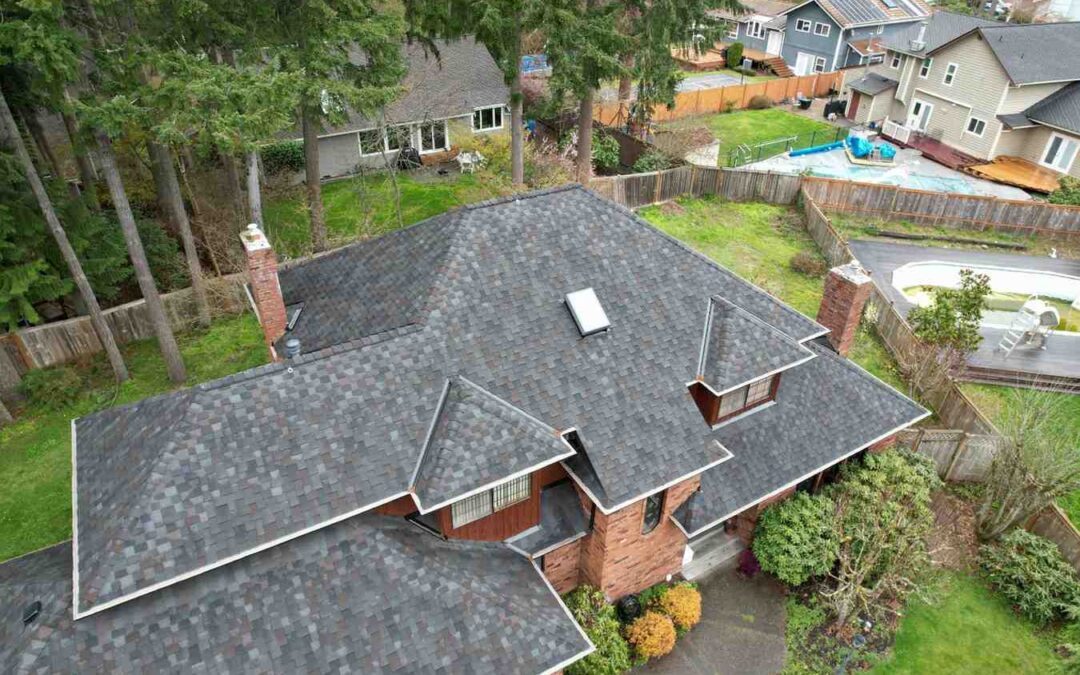
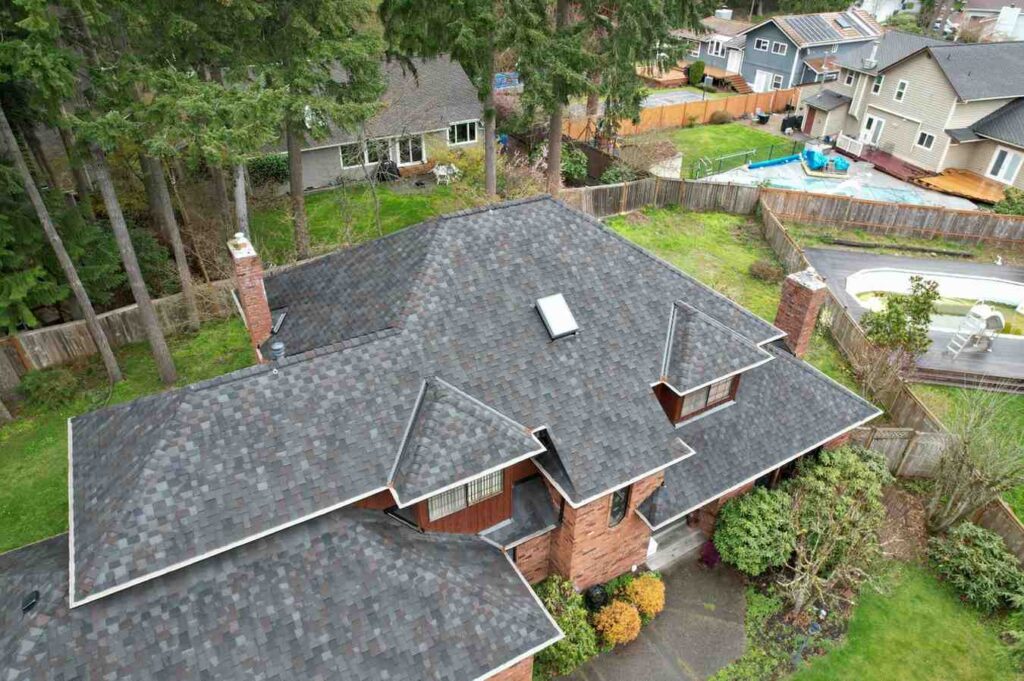
Shingles in the yard after a windstorm usually mean one thing: it’s time to figure out whether this is coming out of your pocket or your insurance company’s. We do free storm inspections for exactly this reason, and more often than not, homeowners are owed more than the first number an adjuster offers them.
Here’s what actually happens with these claims, and where insurers try to cut corners.
What’s Usually Covered
Most standard homeowners policies cover sudden, specific damage: a windstorm that lifts or tears off shingles, a tree limb coming down on the roof, hail. If there’s a clear, identifiable event behind the damage, insurance typically covers repair or replacement, minus your deductible.
What’s Usually Not Covered
Where it gets complicated is damage that built up slowly instead of happening all at once. Insurers generally don’t cover damage from age, wear and tear, or a lack of maintenance, and adjusters know this. If a roof was already 20+ years old and moss had been working on it for a couple of winters before a windstorm exposed the problem, the adjuster’s first move is often to argue the real cause was age or neglect, not the storm. Getting your roof looked at regularly, storm or no storm, gives you a record of its condition before anything happens, which matters a lot once you’re arguing with an insurance company.
The Part Adjusters Don’t Bring Up: Matching
This is the one that catches people off guard, and where we push back the most. Say a storm damages one slope of your roof, but the rest looks fine. Insurers will often try to pay for a patch on just that section, even when the new shingles obviously won’t match the weathered ones next to them.
Washington doesn’t have a dedicated matching law like some states, but state insurance regulations (WAC 284-30-391) require insurers to restore your property to its pre-loss condition. Adjusters don’t usually lead with that. In practice, it means you have real grounds to push back on a patchwork repair that leaves your roof looking mismatched, and we’ve had these conversations with insurance companies before. It’s not automatic, and it’s worth raising directly with your agent or the Washington State Office of the Insurance Commissioner if you run into it, but you don’t have to just accept the first answer you’re given.
What to Do If You Think You Have Storm Damage
A few things make a real difference in how a claim plays out:
- Get a professional roof inspection as soon as you can after the storm, before you file. We do these for free, and documented damage carries more weight than a phone description of it.
- Photograph everything, both from the ground and up close if it’s safe to. Interior damage counts too, so get photos of ceiling stains or attic leaks with a date on them.
- Call your insurance company and start the claim while the damage is fresh and clearly tied to the storm.
- Keep a copy of everything you send them.
If a Recent Storm Has You Wondering About Your Roof
If you’ve got shingles down or you’re just not sure whether the last windstorm did any damage, we’ll come out and give you a straight answer, whether that’s a roof repair, a gutter repair, or a full replacement. Not sure your roof needs attention at all yet? Our post on repair vs. replacement is a good place to start.
We offer free estimates and inspections, and we’re licensed, bonded, and insured. We’ve been doing this in Bonney Lake and the surrounding Pierce and King County area for over 25 years.