
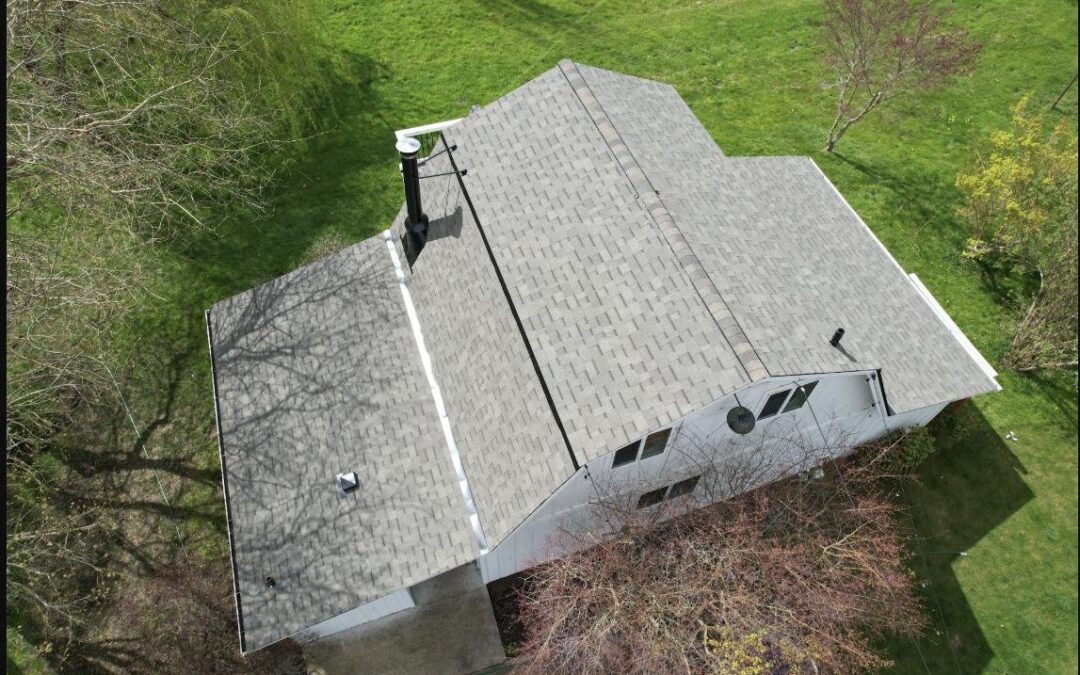
Pierce County homeowners should know three big things about their roofs: our constant rain and moss wear roofs out faster than the label says, windstorms and tall trees are the biggest sudden threat, and catching small problems early is always cheaper than waiting for a leak. Get those right, and your roof will take care of you for a long time.
This guide pulls it all together, from how your roof works and what our weather does to it, to warning signs, repair vs. replacement, costs, gutters, storms, and how to find a roofer you can trust.
Table of Contents:
- How Does a Roof Protect Your Pierce County Home?
- What Does Pierce County Weather Do to Your Roofing?
- How Long Does Roofing Last in the South Sound?
- What Are the Warning Signs Your Roof Needs Attention?
- Should You Repair or Replace Your Roof in Pierce County?
- How Much Does a Roof Replacement Cost in Pierce County?
- How Do Gutters Help Protect Your Roofing?
- What Should You Do After a Storm Damages Your Roof?
- How Do You Choose a Roofing Contractor in Bonney Lake and the South Sound?
- Why Do South Sound Homeowners Trust Northwest Preferred Roofing?
- Keep Your Roof Ahead of the Weather
How Does a Roof Protect Your Pierce County Home?
Your roof protects your home with several layers working together, not just the shingles you see from the street.
Think of it like your rain gear for a Pacific Northwest hike. The outer shell gets wet first, but the layers underneath are what actually keep you dry.
- Shingles are the outer shell. They shed water and take the beating from rain, wind, and sun.
- Underlayment is the waterproof layer underneath. It’s your backup if a shingle fails.
- Flashing is the metal around chimneys, vents, skylights, and walls. These joints are where most leaks start.
- Decking is the wood everything is nailed to. Once water reaches it, repairs get expensive.
- Ventilation lets warm, damp air out of your attic. In our climate, a poorly vented attic can grow mold and rot your decking from the inside.
What Does Pierce County Weather Do to Your Roofing?
Our weather is tough on roofs in a slow, steady way most of the year, then hits hard during windstorms.
Rain and Moss
We don’t get roof-crushing hail or desert sun around here. What we get is months of damp, cloudy weather, which is exactly what moss loves. Moss holds water against your shingles and slowly lifts them, letting water sneak underneath. It’s especially common on the north side of the roof and under trees, where things never quite dry out. For the full rundown, read Why Is My Roof Growing Moss? (And What to Do About It).
Windstorms and Falling Trees
Then there are the big storms. In November 2024, a “bomb cyclone” tore through Western Washington with gusts topping 70 miles per hour, knocking out power to hundreds of thousands of homes. Trees came down on houses across the region, including a trailer in Maple Valley where two people were hospitalized, and power restoration in Pierce and King counties was delayed for days as crews cleared fallen trees and downed lines.
Those tall Douglas firs that make our neighborhoods so pretty are also the biggest storm risk for many homes. Keeping branches trimmed back from the roof and getting an inspection after a big blow are two of the smartest things you can do.
How Long Does Roofing Last in the South Sound?
Most asphalt shingle roofs here last around 20 to 25 years, but moss, shade, and poor ventilation can cut that short. Metal and other premium materials can last a lot longer.
The age printed on the shingle package assumes ideal conditions, and “ideal” isn’t exactly how anyone would describe a Pierce County winter. For a full breakdown by material, see How Long Does Roofing Last in Washington’s Climate?.
What Are the Warning Signs Your Roof Needs Attention?
The most common signs are moss buildup, missing or curling shingles, grit from the shingles collecting in your gutters, and water stains inside. You can spot most of them from the ground or your attic.
Outside, look for:
- Thick moss, especially along the north side and under trees
- Missing, curling, cracked, or lifted shingles
- Shingle grit in your gutters or at the bottom of downspouts
- Sagging along the roofline
- Loose or rusted flashing around chimneys and vents
Inside, look for:
- Water stains or bubbling paint on ceilings
- A musty smell, damp insulation, or dark spots in the attic
- Daylight coming through the roof boards
One sign means it’s time for an inspection. Several signs together mean don’t wait.
Should You Repair or Replace Your Roof in Pierce County?
Repair usually makes sense when the damage is limited to one area and the roof still has plenty of life left. Replacement usually makes sense when the roof is near the end of its life, the damage is spread out, or the same spots keep leaking.
A few missing shingles after a windstorm or one leaky vent boot are usually quick fixes. Widespread moss damage, soft decking, or a roof that’s past 20 years old is a different story. Patching an old, worn-out roof is a bit like putting a new tire on a car with a blown engine. For a deeper dive, check out Repair or Replace? Signs Your Roof Needs Attention After a Pacific Northwest Winter.
How Much Does a Roof Replacement Cost in Pierce County?
The cost of a roof replacement depends mostly on your roof’s size, its steepness, and the material you choose. Our Puget Sound labor market also tends to run higher than national averages.
For real local numbers, see our guide to How Much Does a Roof Replacement Cost in Bonney Lake, WA? 2026. If the number feels like a lot to take on at once, we offer financing options to help spread it out.
How Do Gutters Help Protect Your Roofing?
Gutters carry thousands of gallons of rain off your roof and away from your home every year. When they clog with needles and leaves, water backs up under the edge of your roof, rots the fascia boards, and pools around your foundation.
In a place where it rains as much as it does here, gutters aren’t optional. They’re part of your roof system. If yours are sagging, leaking, or overflowing, see 5 Signs Your Home Needs Gutter Replacement Before the Rainy Season.
What Should You Do After a Storm Damages Your Roof?
After a storm, stay safe, document the damage from the ground, and get a professional inspection before you file an insurance claim.
- Stay off the roof, especially if it’s wet, and stay away from any downed power lines.
- Take photos of missing shingles, fallen branches, and any damage you can see.
- Check inside for new stains or drips.
- Get a free storm inspection so you know the full extent of the damage.
- File your claim promptly if the damage is storm-related.
One warning: if a roofer ever offers to waive or cover your insurance deductible, walk away. That’s a big red flag and can drag you into insurance fraud. To learn how claims really work, read What Insurance Adjusters Won’t Tell You About Storm-Damaged Roofs in Washington.
How Do You Choose a Roofing Contractor in Bonney Lake and the South Sound?
Choose a local roofer who’s properly registered and insured, certified by the shingle manufacturer, and willing to put everything in writing.
After big windstorms, out-of-town crews tend to show up looking for quick jobs. Here’s how to tell the pros from the fly-by-nights:
- Registration and insurance. Washington requires contractors to be registered with the state Department of Labor & Industries. Ask for their registration number and proof of insurance.
- Manufacturer certification. Certifications like GAF mean the roofer meets the manufacturer’s standards, which can unlock stronger warranties.
- A written contract. Scope, materials, timeline, and payment schedule should all be in writing.
- Local reputation. Look for years in the area, real local reviews, and community recognition.
- No pressure. A good roofer gives you time to think. “Sign today” deals after a storm are a red flag.
Why Do South Sound Homeowners Trust Northwest Preferred Roofing?
South Sound homeowners trust Northwest Preferred Roofing because we’re neighbors first, and we treat every roof like it’s on our own house.
Our founder, Leo, started in roofing more than 30 years ago and worked his way up from the bottom. He personally trained our crew on complex roofing systems and proper installation, and together we’ve completed hundreds of roofs across the Puget Sound area. We back that work with a Limited Lifetime Workmanship Warranty on every full roof replacement, a 3-year workmanship warranty on repairs, and a 10-year warranty on gutter installations.
We’re a GAF Certified contractor and BBB Accredited business. Our neighbors have voted us a Nextdoor Neighborhood Fave in both 2023 and 2024, and we’ve been recognized with the Best Roofers in Puyallup Expertise Award and the Best of Bonney Lake Award for roofing contractors. Our team works with asphalt shingles, wood shakes, metal, slate, and tile, and we handle roof replacements, repairs, maintenance, and gutters across Bonney Lake, Tacoma, Puyallup, Sumner, Auburn, Kent, Renton, Maple Valley, Enumclaw, Buckley, and nearby communities.
Keep Your Roof Ahead of the Weather
You now know how your roof works, what our rain, moss, and windstorms do to it, the warning signs to watch for, how to weigh repair vs. replacement, and how to pick a roofer you can trust. That puts you a step ahead of most homeowners, who don’t think about their roof until something’s dripping.
If you’d like to know exactly where your roof stands before the worst of the rainy season, a free estimate from Northwest Preferred Roofing is the easy next step. We’ll check your shingles, flashing, gutters, and attic, look for moss and storm damage, and walk you through what we find in plain language, along with honest recommendations and clear pricing if anything needs attention.
Get Your Free Roofing Estimate From Northwest Preferred Roofing